Why I do this work
I want students to leave us as producers of this technology, not only consumers of it.
My doctoral research asked what it actually takes for a school system to move past the factory model. The answer was not a curriculum, a platform, or a purchase. It was that leadership has to build the conditions before the practice can change. I have spent every role since testing that finding in a different setting: a national reform abroad, two school-wide implementations at home, a district in the middle of a pandemic, a platform company, a military medical training center, and an AI-first company funded by federal research grants.
The fit with this role is the through-line. The classification names human-centered and socially conscious leadership first. That is the discipline I have practiced in every one of those settings, and it is the reason the work held after I left.
Works

Also: M.Ed. in Multicultural Education, National University. B.M. in Jazz Studies, USC.
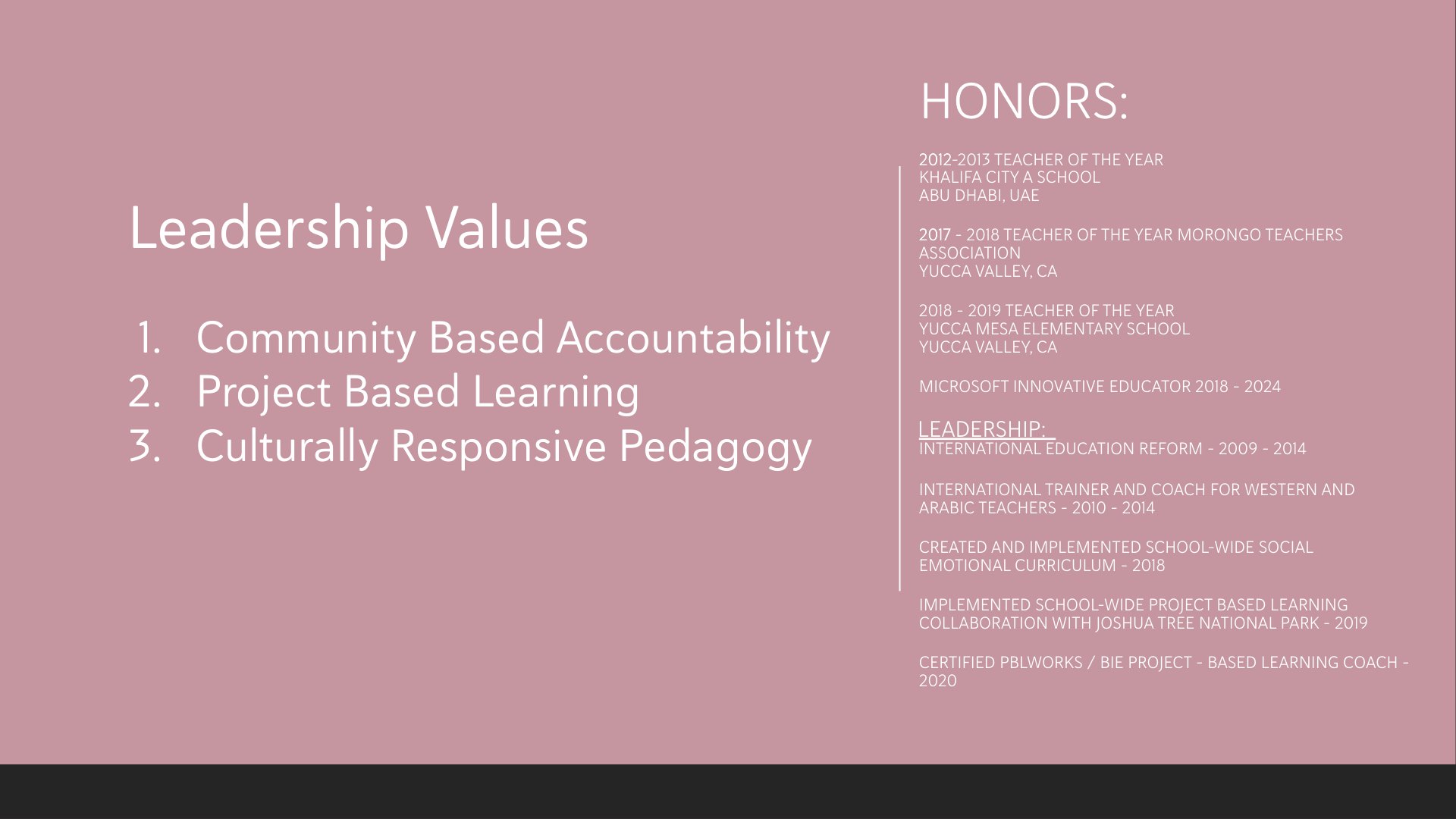
Three times Teacher of the Year
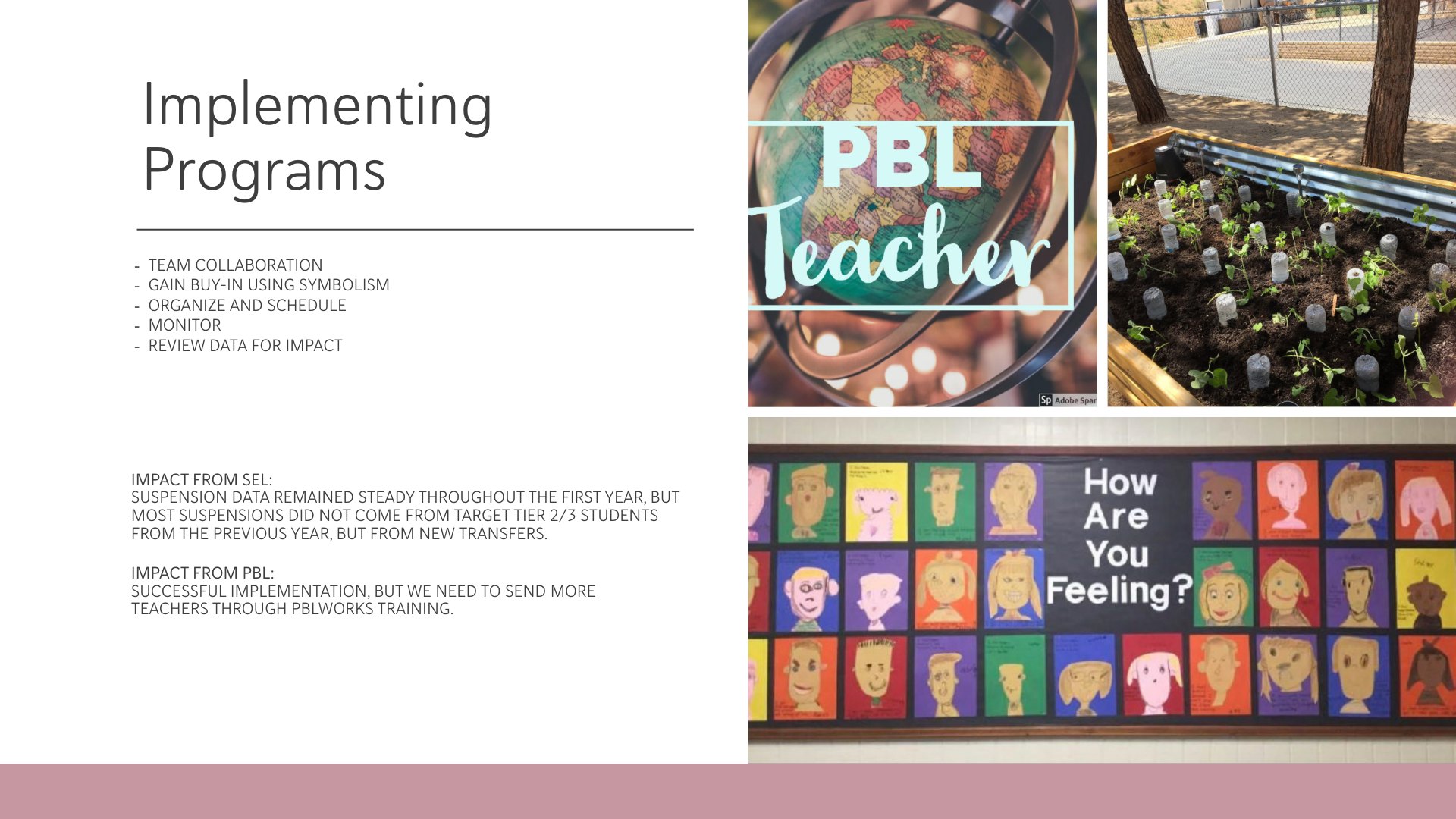
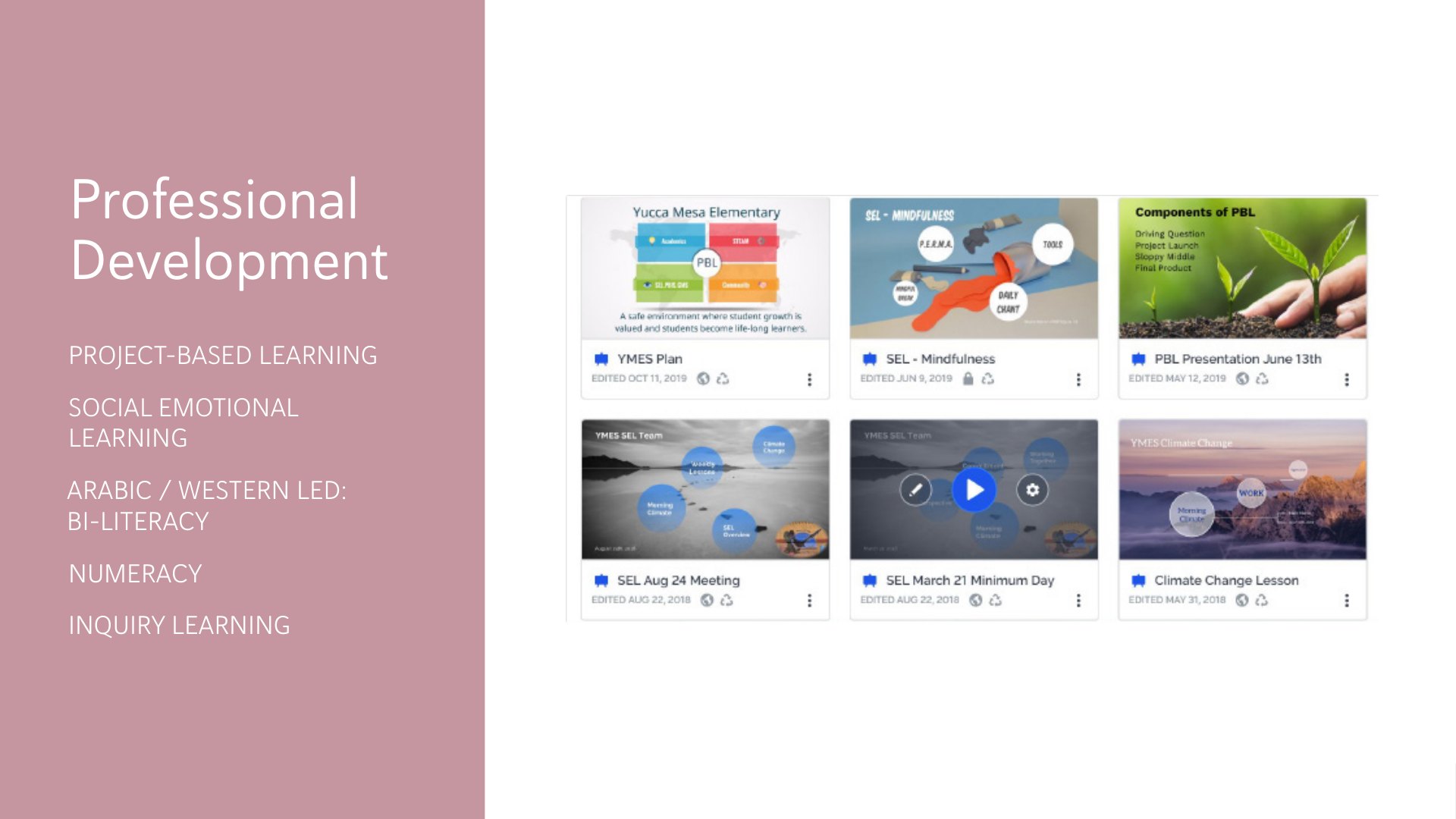
Once abroad during a national reform, twice at home for the two implementations this work still rests on: social-emotional learning and project-based learning.
The arc
Select any image to see the work up close.
Abu Dhabi's national New School Model. Trainer and coach for Western and Arabic teachers in bi-literacy, numeracy, and inquiry learning. Reform at national scale, in two languages, across two professional cultures. Teacher of the Year, 2012.
Designed and implemented a school-wide social-emotional curriculum, then school-wide project-based learning with Joshua Tree National Park. Tracked the data honestly, including what the suspension numbers did and did not show. Teacher of the Year twice.
The Joshua Tree National Park share-out: students presenting the project-based learning capstone to the park and the community.
Led district training through the shift to distance learning, including the equity trainings that went with it. The clearest lesson of my career about what happens when technology arrives faster than the conditions for using it.
Research on edtech adoption for Microsoft Education, focused on the people who decide whether a tool lives or dies in a school: leaders and instructional coaches. What we learned about why adoption stalls is the spine of the 201 and 301 argument in this brief. Microsoft Innovative Educator, and facilitator of Educator Insider Series workshops on tools that support students with learning differences.
Led the education side of ModelIt, a company building computational modeling for K-12 science, funded by NSF and NIH research grants. Full curriculum, teacher training, standards alignment, grant writing, efficacy research, and the judgment about what should and should not be automated. Leading an AI-first company as an educational leader is the closest preparation there is for coordinating one inside a county office.
Regulated instructional design for military medical training, where the standard is performance under pressure and the review process is unforgiving. Organizational change, staff development, and a human-centered design approach. Case study in the work samples below.
Vice President of Education at a biotechnology startup, and learning design across endocrine science, managed-care clinical teams, and academic medicine. The audiences change. The discipline of designing with the people who do the work does not.


Board member and technology specialist for UNITY. Co-facilitator of the CAAASA AI Summer Institute. In Washington DC in May 2024 for the 70th anniversary of Brown v. Board of Education.
Organizations I have built learning for



The work, not the description of it
Each of these is a live sample or a real artifact. Run them.
What AI Actually Is, and What It Isn't
Five interactive lessons and a knowledge check, built for the California Association of African American Superintendents and Administrators. This is the 101 done properly, so that the 201 and 301 have something to stand on.
Open full screen →A simulated inbox, not a slide about one
A short training that drops the learner into a working inbox and lets consequence teach what a rule cannot. Built in one working day as a capability demonstration. The habit it builds, slowing down at the decision point, is the same habit the 301 level asks of an adult using AI on real work.
Open full screen →Captains Career Course walkthrough
When the assessment is performance, the design changes. Doctrine taught through the decision, with consequence shown rather than scored. Full case study below.
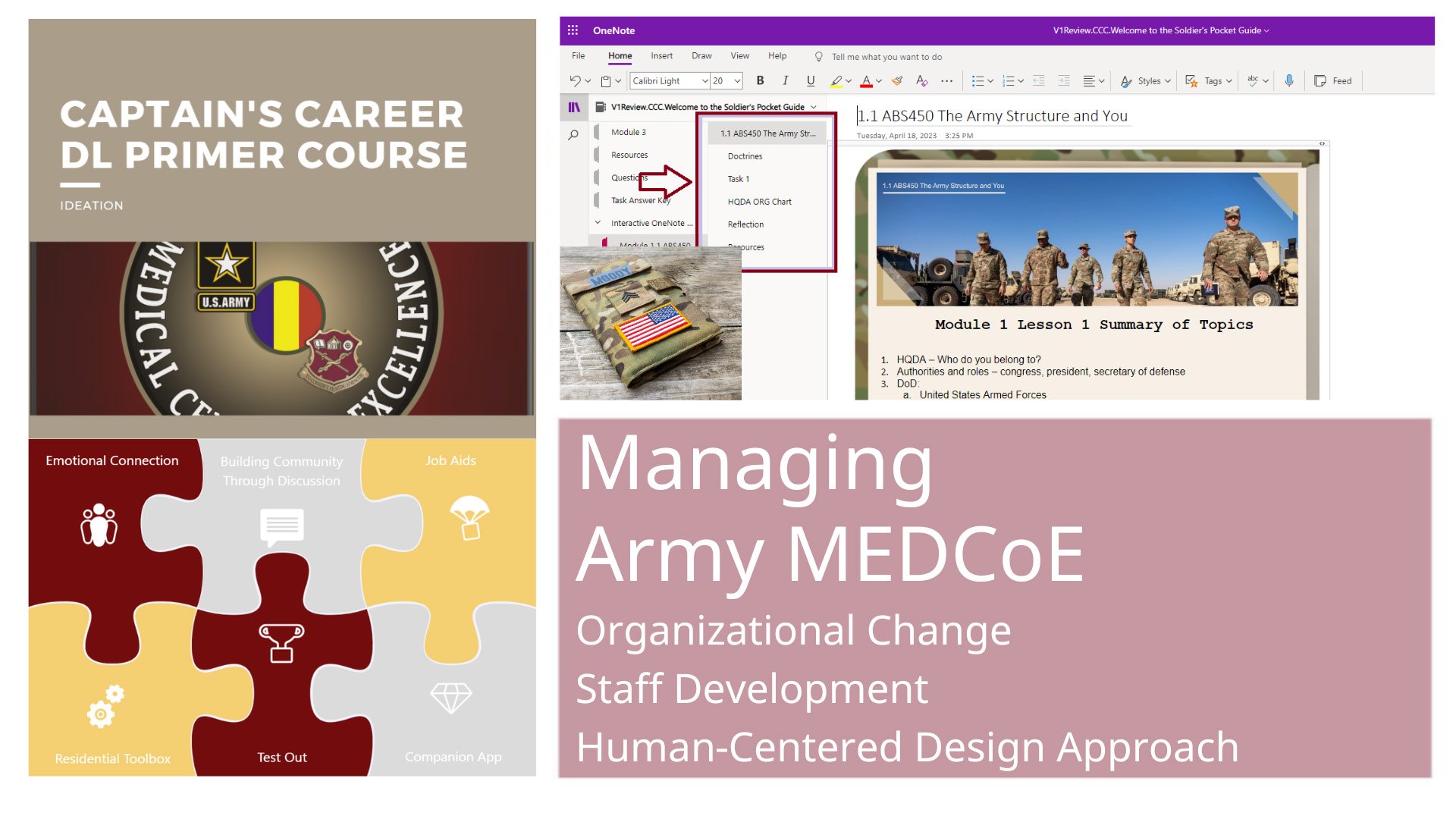
Organizational change, staff development, human-centered design
The distributed-learning primer for the Captain's Career Course: a job-aid-driven design built with the officers and instructors who would use it, reviewed against Army doctrine, and delivered inside the Army's own learning management environment.
When the assessment is performance, the design changes.
UNITY · Women Leaders Thriving Together
Board member and technology specialist. In May 2024 I joined the network in Washington DC for the 70th anniversary of Brown v. Board of Education.
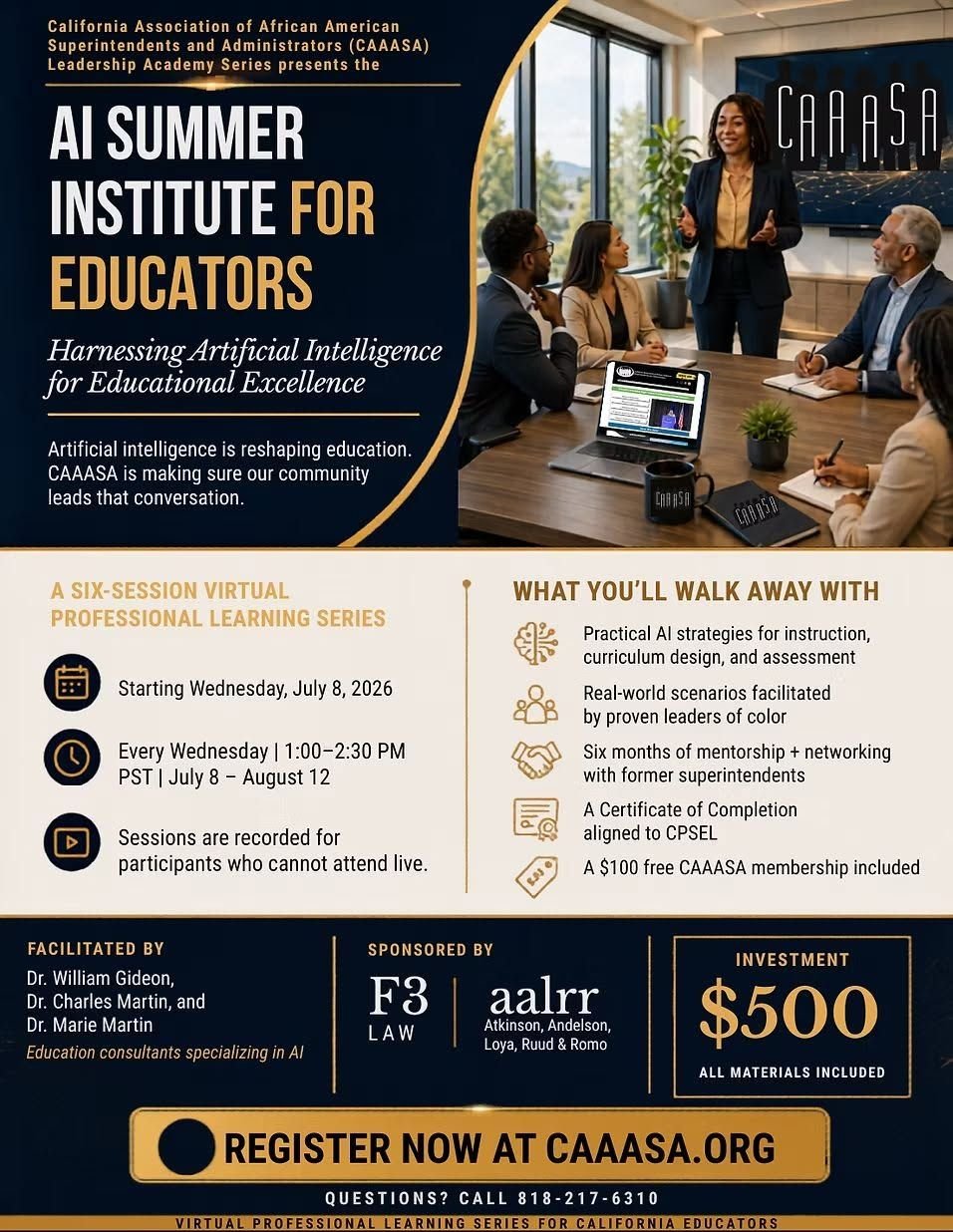
CAAASA AI Summer Institute for Educators
Co-facilitator of a six-session series for the California Association of African American Superintendents and Administrators, aligned to CPSEL. Practical AI strategy for instruction, curriculum design, and assessment.
Human connection, and how adoption actually happens

Every implementation I have led succeeded or failed on the same variable, and it was never the technology. It was whether the people being asked to change had been treated as designers of the change or as recipients of it.
Education leaders already have two frames for this, and both are in my dissertation. Kotter gives the sequence: urgency, a guiding coalition, a shared vision, short-term wins, and anchoring the change in culture. Fullan gives the relationships: focusing direction, cultivating collaborative cultures, deepening learning, and securing internal accountability. Adoption of AI is a change-management problem wearing a technology costume. The systems that got it right kept the human connections intact while the tools moved underneath them. The systems that got it wrong announced a tool and lost the room.
Labor partners and families in week two. Listening sessions with classified staff, who use these tools and are almost never asked. Co-design studios instead of briefings. Guardrails written by the people who will live under them. Pilots measured against a baseline, with the failures published alongside the wins.
The same human-centered design cycle I bring from corporate learning design, run on the task force itself: discover with the people who do the work, prototype small, iterate on what they tell us, and scale only what held. Explicit about the method, so nobody has to guess how decisions get made.
Human-centered design is not a warm sentiment attached to a rollout. It is the discipline of starting with the person who has to do the work differently on Monday, and refusing to design past them. The reason the first thirty days of the task force are listening, before anything is decided or bought.
Where I show up
- California state policy workgroup on AI in education, by invitation.
- Los Angeles County workforce development convenings, including family and schools work with Loyola Marymount University.
- Deaf Community Workforce conference, October 2026.
- CUE conference, exhibiting, October 2026.
- Board service with UNITY and the Foundation for Black Excellence.